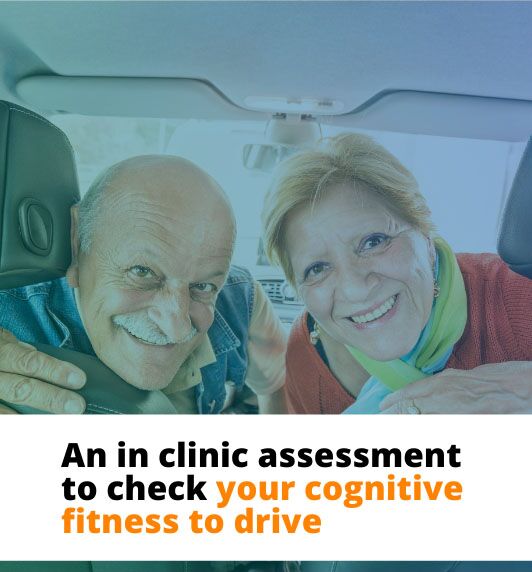
Cognitive Fitness to Drive Evaluation

OT Driving Assessments: Cognitive Safety & Risk Evaluation

Drive Safe OT Driving Assessment

Deciding if a loved one is safe to drive is stressful. When memory loss, Dementia, or neurological changes are involved, the “rules of the road” change. A standard driving test looks at skills, but it often fails to measure the hidden cognitive risksโ€”like split-second decision-making and impulse control.

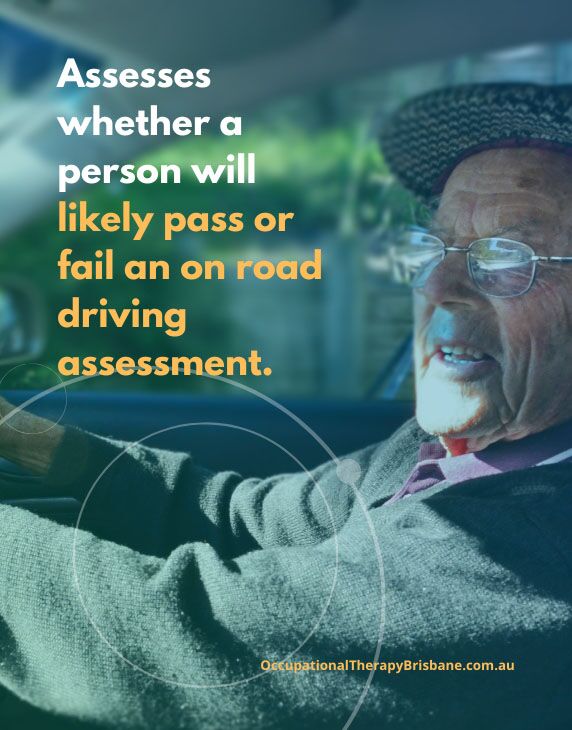
You need a clinical answer, not a driving lesson. We answer this clearly through an OT driving assessment process that’s designed for drivers experiencing cognitive decline.

At Occupational Therapy Brisbane, our clinical focus is Cognitive Health. We go beyond basic checklists to answer the critical question facing families and GPs: “Do they have the cognitive reserve to drive safely?”

We utilise a proprietary cognitive evaluation model designed to map the specific brain functions required for the road. This rigorous assessment aligns with the Assessing Fitness to Drive (Austroads) guidelines, providing you with a detailed Clinical Risk Profile.

So, whether you’re a family member seeking peace of mind, or a GP requiring objective data for a medical licensing decision, we provide the specialised clarity you need.

Phase 1: The Clinical Cognitive Screen: Helps Map Brain Skills to Driving Risk

Before a driver enters a vehicle, we must understand the “why” behind their driving behaviours. Putting a driver with significant cognitive impairment directly onto the road can be stressful and unsafe.

We utilise a proprietary Cognitive-Functional Evaluation to bridge the gap between medical diagnosis and on-road performance.

Unlike standard screenings, our model looks “under the hood” of the driver’s cognitive capacity. We integrate evidence-based tools, including the DriveSafe DriveAware (DSDA) and specific executive function tests, to measure:

  • Impulse Control & Judgement: Can they predict a hazard before it happens?
  • Processing Speed: Can the brain react fast enough for Brisbane traffic?
  • Visuospatial Mapping: Can they accurately judge gaps and distances?
OT Home Assessment

The Outcome: A Clinical Risk Profile This screen provides a predictive “Go/No-Go” indicator for the on-road drive.

  • For Families: It provides a dignified, objective answer on safety without the stress of a driving failure.

  • For GPs: It delivers the validated data required to support complex “Fitness to Drive” decisions, reducing clinical uncertainty.

Ready to Schedule? Your Appointment Checklist

35 Babarra St, Stafford 4053 (North Brisbane)

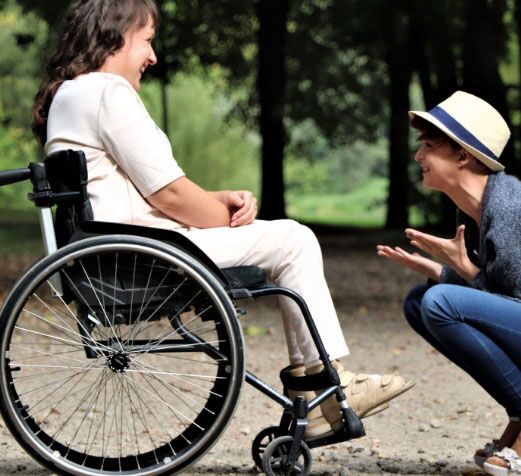
Our clinic is fully wheelchair accessible with free onsite parking at the door.

Please Note: This service is strictly for Cognitive & Neurological driving concerns.

We do not currently assess drivers where the primary condition is acute mental health (e.g., Psychosis/Schizophrenia).

To comply with TMR reporting standards, we require a GP Referral or Medical Summary, Vision assessment and any recent hearing evaluation reports prior to the appointment.

GP Referral Download: OT Driver Screening Referral Form

Specialist clinics are held twice weekly.

To secure an urgent appointment for a TMR deadline, please call our intake team on 1300 783 200.

Upon booking, you will receive a confirmation email and a “Pre-Appointment Guide” via SMS + Email. This ensures you arrive prepared and calm for the assessment.

Total Investment: $749.00

Includes the comprehensive Clinical Screen and the Medico-Legal Report for your GP/TMR.

Rebates may be available via Private Health Insurance (Occupational Therapy Extras).

Old Age And Driving cognitive fitness to drive

Who Requires a Cognitive Driving Evaluation?

This assessment is not just for “older drivers.” It is a clinical necessity for any adult where a medical event or cognitive change has raised questions about road safety.

We specialise in defining the medical fitness to drive for:

  • Memory & Cognition: Individuals with Mild Cognitive Impairment (MCI), early-stage Dementia, or Alzheimerโ€™s, where family members are noticing lapses in judgement or memory.
  • Neurological Recovery: Drivers returning to the road following a Stroke, Traumatic Brain Injury (TBI), or Parkinsonโ€™s diagnosis who require clinical clearance.
  • TMR & GP Requirements: Drivers who have been asked by the Department of Transport (TMR) or their GP to provide a specialist functional report to retain their license.

The Clinical Value: For GPs and Families, this process removes the guesswork. Instead of proceeding directly to a potentially stressful on-road failure, our proprietary screening model predicts the likelihood of safety. This saves time, preserves dignity, and provides the objective data required for the TMR Medical Certificate.

Clinical Note: This assessment is specialised for cognitive and neurological function. It is not currently suitable for patients where the primary barrier to driving is an active acute mental health condition (e.g., severe anxiety, psychosis).

Schedule Your Cognitive Driving Assessment

Start the Process – Our intake team will coordinate with you and your GP to ensure all TMR reporting requirements are met.

Not ready to book a full assessment?

If you’re seeing “near misses” or confusion but aren’t sure if it’s time to act, start with our free clinical guide. Download Guide Below —

FREE Self Assessment: 15 Warning Signs Driving Is Difficult
FREE SELF ASSESSMENT: REVEALS 15 WARNING SIGNS DRIVING IS DIFFICULT
Free 15 Point Assessment Helps Spot Unsafe Driving Early. To DOWNLOAD Your Free Copy Today, enter your name and email below.

  • This field is for validation purposes and should be left unchanged.
OT Driving Assessment Services Brisbane

Cognitive Health & Road SafetyOur focus is to provide you with the objective clinical data required to navigate complex licensing decisions. We help families move from ‘worrying’ to knowing.

Frequently Asked Questions

A driving assessment screening is an occupational therapy evaluation that looks at how changes in memory, attention, vision, or movement may affect someoneโ€™s ability to drive safely. Itโ€™s often recommended after a neurological condition, illness, or injury. The screening helps identify whether further testing, retraining, or adjustments may be needed. For some, it provides reassurance; for others, it clarifies the next safe step. Contact our Brisbane team if youโ€™re unsure whether this applies to your situation.

A screening is an early, shorter process. It checks for key cognitive, physical, and visual skills linked to safe driving. If results are clear, you may not need a full on-road assessment. If areas of concern appear, we can guide you towards a comprehensive OT driving assessment in line with Queensland licensing requirements. Think of it as a compass - helping you know whether youโ€™re on track or if more detailed guidance is needed.

The screening is clinic-based and usually takes around an hour. Youโ€™ll complete standardised tests that look at reaction time, attention, memory, and coordination. These are explained in plain English, and thereโ€™s no need to โ€œstudyโ€ beforehand. The goal isnโ€™t to catch people out - itโ€™s to provide clarity and confidence about driving safety. At the end, youโ€™ll receive feedback and recommendations for next steps.

Many people find relief in having clear information rather than uncertainty. A screening can:

  • Reassure you or your family about driving ability.
  • Highlight skills that may need support before an on-road test.
  • Provide evidence for GPs, specialists, or licensing authorities.
  • Reduce stress by offering a clear plan.

Itโ€™s about protecting independence while keeping safety at the centre. Contact us to learn whether a screening could help in your circumstances.

Starts from $749.00. Costs can vary depending on your situation and funding pathway. Some people access screening through NDIS, insurance, or health plans; others pay privately. Weโ€™re transparent about fees and can outline costs before you book, including whether you may be eligible for rebates or support. Speak with our team to understand the best option for you.

A GP referral is not always required, but many clients are referred by their doctor, neurologist, or support coordinator. If youโ€™re unsure, we can guide you through the referral process and explain what documents may be useful. Having your GP involved ensures your care stays connected and well-documented.

Booking is straightforward. You can contact Occupational Therapy Brisbane directly by phone or online. Our team will talk through your situation, explain what to expect, and arrange a time that suits you. If youโ€™re a GP or support coordinator, we also accept direct referrals. Taking the first step is often the hardest, but it can bring peace of mind for both drivers and families.

How Can We Help You?

Please fill out the short form below and tell us how can we best help you? One of our team members will reach out when it comes through.

Scroll to Top
Join our mailing list

Sign-up to our mailing list to receive all the latest news, updates and service specials right to your inbox.  

  • This field is for validation purposes and should be left unchanged.